Table of Contents
- Insurance Bad Faith Litigation in Oklahoma: What Policyholders Must Know
- Fundamentals of Bad Faith Insurance Claims in Oklahoma
- Proving Insurance Bad Faith: Evidence and Legal Standards in Oklahoma
- Steps to Take When Filing a Bad Faith Lawsuit in Oklahoma
- Punitive Damages in Oklahoma Insurance Bad Faith Cases
- Frequently Asked Questions About Insurance Bad Faith in Oklahoma
- Take the Next Step with Stipe Law Firm
Insurance Bad Faith Litigation in Oklahoma: What Policyholders Must Know
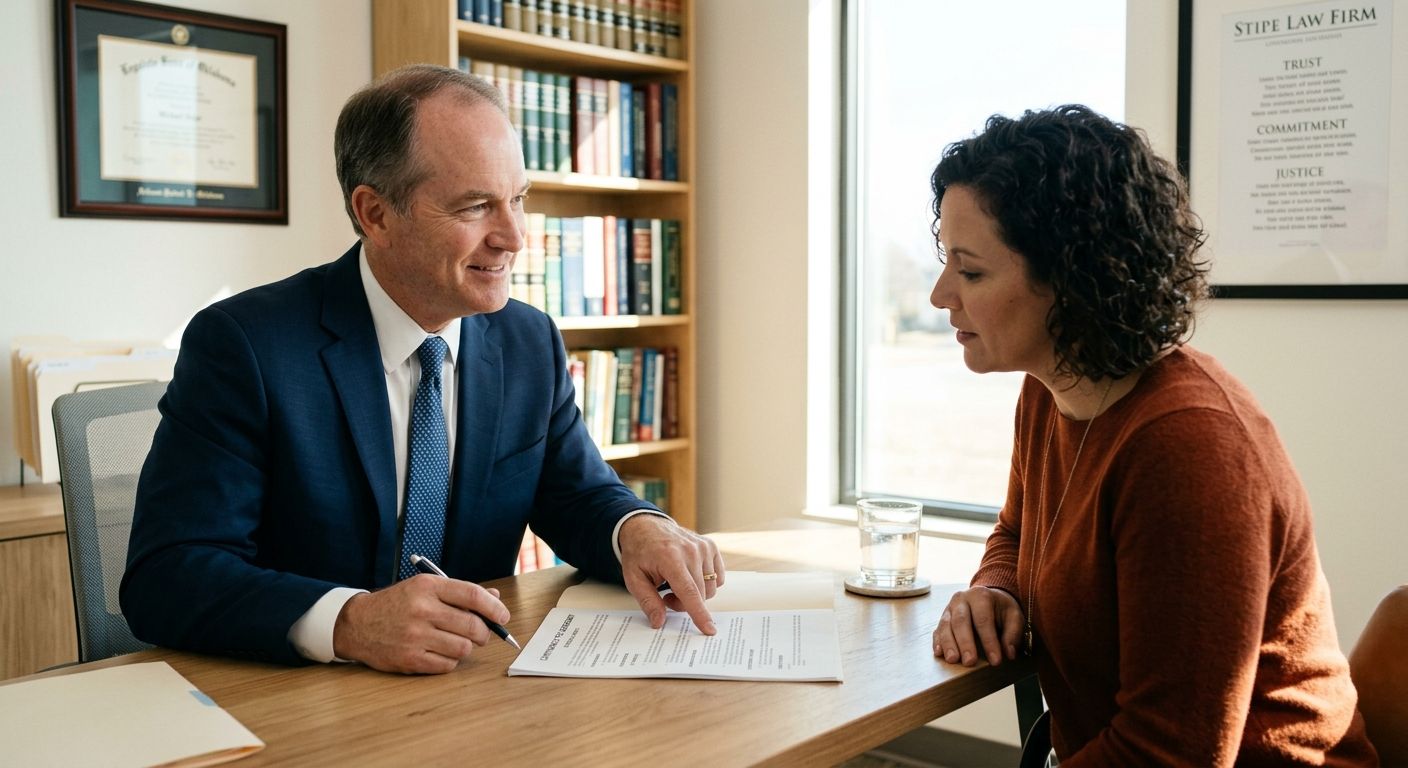
When an insurance company unreasonably denies, delays, or undervalues a valid claim, it may be acting in bad faith. Insurance bad faith in Oklahoma law holds insurers accountable for such misconduct, protecting policyholders from unfair treatment. At Stipe Law Firm, we understand the frustration and financial strain caused by an unreasonable denial of insurance claim Oklahoma residents experience, and we are committed to fighting for the full compensation you deserve.
Insurance bad faith refers to an insurer’s breach of its duty of good faith and fair dealing. Oklahoma law recognizes both first-party claims, where an insurer mistreats its own policyholder, and third-party claims, where an insurer fails to settle a claim against its policyholder in good faith. Common examples of insurer misconduct include:
- Unreasonable denial of a legitimate claim after a loss
- Failure to conduct a thorough and timely investigation
- Offering settlement amounts far below the actual value of the claim
- Unjustified delays in processing or paying a covered claim
- Threatening or coercive conduct toward the insured
- Canceling a policy without valid grounds after a claim is filed
According to the Oklahoma Bar Association, these actions can form the basis of a legal claim against the insurer. Policyholders must prove that the insurer’s conduct was unreasonable under the circumstances and that they suffered harm as a result.
When an insurer acts in bad faith, policyholders may recover more than just the original policy benefits. Damages available include actual financial losses, compensation for emotional distress, and attorney fees. In cases involving particularly egregious conduct, you may also pursue punitive damages for insurance bad faith. Punitive damages are designed to punish the wrongdoer and deter similar behavior. Under Oklahoma law, a policyholder must present clear and convincing evidence that the insurer acted with reckless disregard or intentional malice.
With more than 60 years of combined legal experience, Stipe Law Firm has the knowledge and courtroom readiness to stand up to powerful insurance companies. Our firm has recovered millions of dollars for clients facing unfair insurance practices. We offer a no-obligation Free Case Evaluation to discuss your situation and explain your legal options. Contact us today to learn how we can help you hold your insurer accountable.
This website provides general information only and is not legal advice. Viewing or using the website does not create an attorney-client relationship. Past results do not guarantee similar outcomes in other cases.
Fundamentals of Bad Faith Insurance Claims in Oklahoma
When an insurance company unreasonably denies or delays a legitimate claim without conducting a proper investigation, it may be acting in bad faith. Under Oklahoma law, policyholders are entitled to more than just coverage—they are owed a duty of good faith and fair dealing. At Stipe Law Firm, we hold insurers accountable when they breach this duty, protecting the rights of individuals and families across Southeast Oklahoma.
A bad faith claim arises when an insurer places its own financial interests above its obligation to the policyholder. This conduct goes beyond a simple mistake; it involves an unreasonable unfair claims practices in Oklahoma that causes real harm. Our firm understands that navigating the aftermath of an accident or loss is stressful enough without an insurance company employing tactics like an unreasonable denial of an insurance claim in Oklahoma. Recognizing the fundamentals of bad faith is the first step toward protecting your rights and seeking accountability.
The following table contrasts the conduct expected in good faith claims handling with the behaviors that can constitute bad faith.
| Aspect | Good Faith Conduct | Bad Faith Conduct |
|---|---|---|
| Claim Decision Timing | Prompt acknowledgment and timely decision within policy terms | Unreasonable delay or denial without proper investigation |
| Communication with Policyholder | Clear explanations of coverage and claim status | Misrepresentation of policy terms or silence on claim progress |
| Investigation Process | Thorough, unbiased investigation of all facts | Inadequate or one-sided investigation favoring insurer |
| Settlement Offer | Fair and reasonable offer based on policy limits and damages | Lowball offer or refusal to pay without valid reason |
These distinctions are not just theoretical. Oklahoma statutes and court rulings provide the framework for identifying and punishing unfair claims practices, and our firm has extensive experience applying these standards to real-world cases. Common examples of bad faith include an insurer’s failure to respond to communications, making false statements about coverage, demanding unnecessary documentation to stall a claim, or offering a settlement far below the actual damages. When an insurance company engages in an unreasonable denial of an insurance claim in Oklahoma, the impacted policyholder may be entitled to significant compensation beyond the original policy benefits.
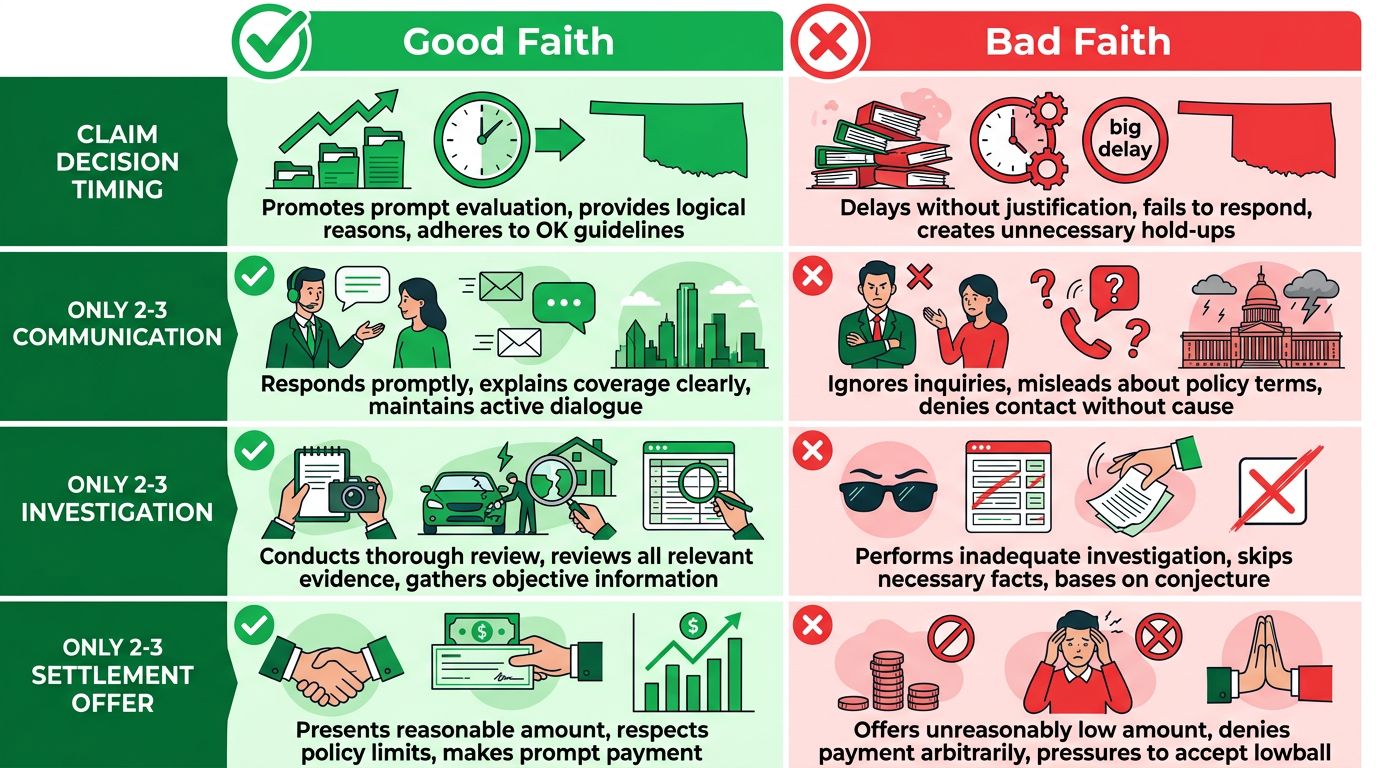
Good faith vs bad faith insurance practices in Oklahoma claims.
In particularly egregious situations, Oklahoma law allows for the pursuit of punitive damages for insurance bad faith. These damages are designed not just to compensate the policyholder but to punish the insurer and deter similar misconduct in the future. With over 60 years of combined legal experience, our attorneys have successfully demonstrated to juries why an insurer’s conduct warrants this extra measure of accountability, including a notable $10 million award in an insurance bad faith case.
Stipe Law Firm is By Your Side when you are facing the power and resources of a large insurance company. We believe that policyholders deserve to have their claims evaluated fairly and ethically. If you suspect your claim has been mishandled through delay, denial, or deception, we encourage you to seek guidance. Contact our firm for a Free Case Evaluation to discuss your situation. Our team will listen to your experience, explain your options under Oklahoma law, and help you understand how we can pursue the full measure of justice on your behalf.
Proving Insurance Bad Faith: Evidence and Legal Standards in Oklahoma
When an insurance company fails to act fairly, insurance bad faith policyholders face significant financial and emotional burdens. Proving insurance bad faith litigation Oklahoma requires more than just showing a denied claim – it demands a strategic approach to evidence and a thorough understanding of Oklahoma’s legal standards. Our firm has extensive experience guiding clients through this complex process, helping them hold insurers accountable when they prioritize profits over people.
Identifying Bad Faith Conduct: Delays, Denials, and Lowball Offers
Insurance bad faith takes many forms, but four primary categories cover most instances of misconduct. An unreasonable denial of insurance claim Oklahoma occurs when an insurer rejects a valid claim without properly reviewing the policy terms or the facts of the case. This may involve ignoring crucial evidence, misrepresenting policy language, or failing to provide a legitimate reason for the denial. An unreasonable denial means the insurer did not fulfill its legal duty to treat the policyholder honestly and fairly.
Delays are equally damaging. When an insurer fails to acknowledge a claim for weeks or months, requests excessive documentation, or refuses to communicate, it creates financial strain on claimants who depend on timely payouts for medical bills, repairs, and lost income. Inadequate investigation is another red flag. An insurer that ignores witness statements, medical records, or other key evidence is not conducting the prompt, thorough investigation required by law. Finally, a lowball settlement offer – one that falls far below actual damages with no justification – demonstrates a refusal to meet the insurer’s obligation.
The following table matches common bad faith conduct with the evidence typically needed to support each type of claim.
| Conduct Category | Examples | Key Evidence |
|---|---|---|
| Unreasonable Denial | Denial without reviewing policy terms or claim facts | Denial letter, policy language, adjuster logs |
| Unreasonable Delay | Failing to acknowledge claim for weeks or months | Time-stamped correspondence, claim timeline, expert analysis |
| Inadequate Investigation | Ignoring witness statements or medical records | Communication records, independent investigation report |
| Lowball Settlement Offer | Offer far below actual damages with no justification | Demand letter, damage calculation, policy limits |
Recognizing these warning signs early is crucial. Insurers are legally required to investigate claims promptly, communicate clearly, and provide valid reasons for any denial or delay. When they fail in these duties, their conduct may rise to the level of bad faith. Our team at Stipe Law Firm knows how to spot these patterns and build a compelling case on your behalf.
Gathering Evidence for Your Bad Faith Claim
Strong evidence is the cornerstone of any successful bad faith claim. To prove insurance misconduct, you and your attorney must compile a comprehensive record that shows the insurer’s unreasonable conduct. Key documents and information to preserve include:
- All written correspondence with the insurance company, including denial letters, settlement offers, and emails.
- Your complete insurance policy and any amendments or endorsements.
- Time-stamped records of all phone calls, voicemails, and in-person meetings.
- Adjuster notes and internal insurance company documents, which can be obtained through discovery in litigation.
- Independent expert reports, such as medical evaluations, accident reconstruction, or damage assessments.
- A detailed timeline of every interaction with the insurer, from the initial claim filing to the final decision.
- Proof of your actual damages, including medical bills, repair estimates, and wage loss documentation.
Thorough documentation allows us to demonstrate precisely how the insurer fell short of its obligations. In many bad faith cases, the most powerful evidence comes from the insurer’s own records – adjuster logs that reveal a pattern of delay, internal communications that show a profit-driven motive, or policy interpretations that contradict the plain language of the contract. Our team has the resources and experience to pursue this evidence aggressively, using the discovery process to uncover the truth. With over 60 years of combined experience, Stipe Law Firm understands what it takes to build a persuasive bad faith case.
The Legal Standard for Bad Faith in Oklahoma Courts
Insurance bad faith litigation Oklahoma involves a heightened legal burden that sets it apart from ordinary breach of contract claims. In Oklahoma, policyholders must prove bad faith by clear and convincing evidence. This standard is more demanding than the preponderance of the evidence standard used in most civil cases. It requires showing that it is highly probable and free from serious doubt that the insurer acted unreasonably and in bad faith. Courts evaluate the totality of the circumstances, considering whether the insurer had a reasonable basis for its actions and whether it conducted a proper investigation.
A significant incentive for pursuing a bad faith claim is the potential recovery of punitive damages for insurance bad faith. Under Oklahoma law, punitive damages may be available when the insurer’s conduct demonstrates reckless disregard for the policyholder’s rights. These damages go beyond compensating for the actual loss and serve to punish wrongful conduct and deter future misconduct. However, punitive damages are not automatic and require clear and convincing evidence of the insurer’s culpable mental state.
The legal standard also examines whether the insurer knowingly or recklessly disregarded its duty to deal fairly and act in good faith. Oklahoma courts have established that an insurer must give equal consideration to the insured’s interests when evaluating a claim. When an insurer places its own financial interests above those of the policyholder, it breaches this duty. Our firm’s familiarity with Oklahoma state, federal, and tribal courts means we understand how judges and juries in this jurisdiction apply these legal principles.
Proving bad faith requires skilled legal advocacy and a meticulous approach to evidence. At Stipe Law Firm, we know what it takes to meet the clear and convincing standard and pursue the full compensation our clients deserve. If you believe your insurer has acted unreasonably, contact us today for a free case evaluation. Stipe Law Firm is By Your Side, ready to put our experience to work for you.
This website provides general information only and is not legal advice. Viewing or using the website does not create an attorney-client relationship; representation must be agreed in writing. Past results do not guarantee similar outcomes in other cases.
Steps to Take When Filing a Bad Faith Lawsuit in Oklahoma
When an insurance company fails to uphold its obligations, pursuing insurance bad faith litigation in Oklahoma becomes a necessary path to justice. The process demands swift action, careful documentation, and experienced legal guidance. At Stipe Law Firm, we have helped countless Oklahomans navigate these challenging claims, and we are prepared to stand by your side through every phase of your case.
Document Everything and Preserve Evidence
The foundation of any successful bad faith claim rests on the quality of evidence you preserve. When facing an unreasonable denial of insurance claim in Oklahoma, meticulous documentation becomes your most powerful tool. Start by gathering every piece of correspondence related to your claim, including denial letters, emails, and text messages from adjusters. Keep a detailed phone log noting the date, time, and summary of each conversation with your insurer.
Beyond communications, secure copies of your insurance policy, proof of loss forms, and any documents you submitted during the claims process. Photographs, repair estimates, medical records, and witness statements all contribute to building a compelling case. This documentary record helps establish the timeline and demonstrates whether the insurer acted unreasonably under Oklahoma law.
It is equally important to verify the credentials of any professional involved in your case before moving forward. You can research attorneys through the Oklahoma Bar Association to confirm they are in good standing and qualified to handle complex litigation.
Consult with a Bad Faith Attorney in McAlester
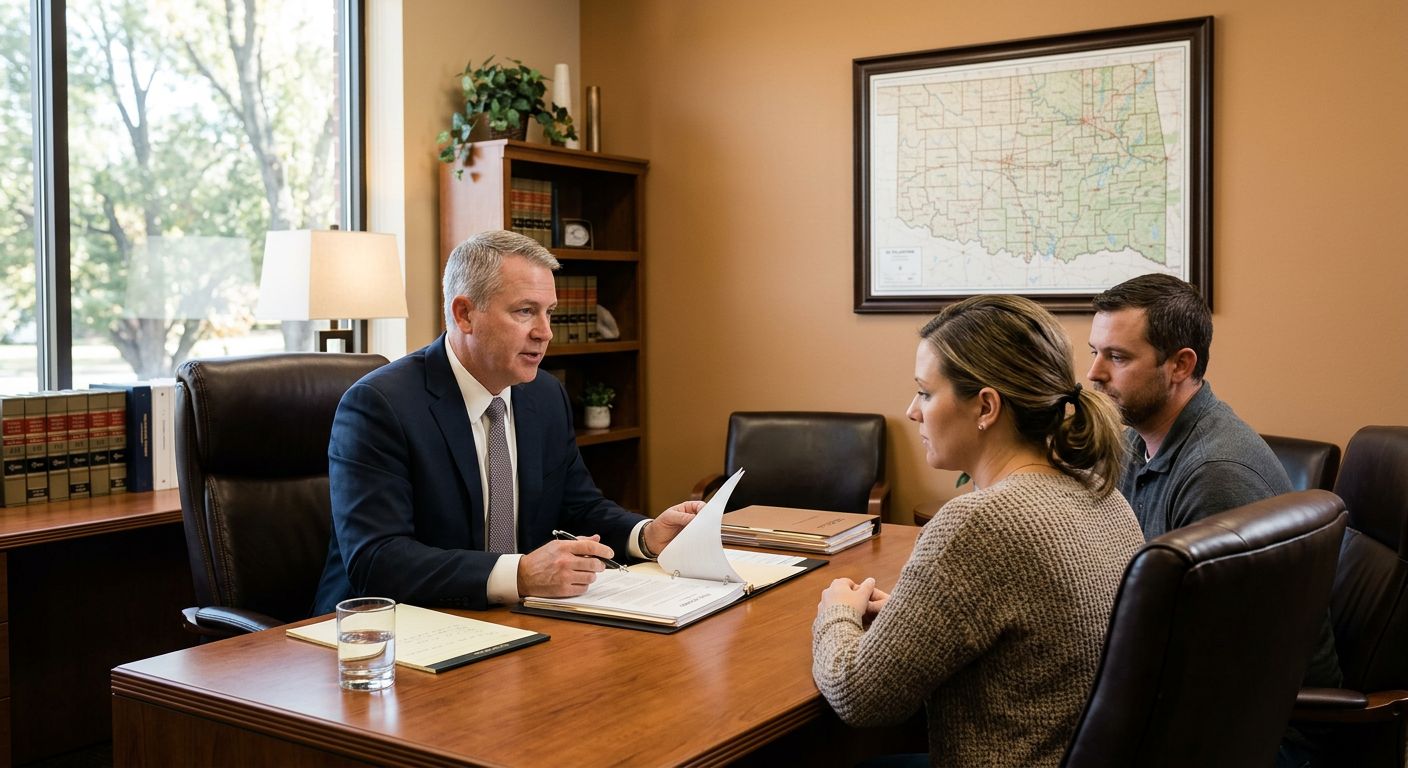
Once you have organized your evidence, the next step is to seek professional legal counsel. At Stipe Law Firm, we offer a Free Case Evaluation to discuss the details of your situation without any upfront obligation. During this consultation, we review your documentation, assess the strength of your claim, and explain the legal options available under Oklahoma law.
Our firm operates on a contingency fee basis, meaning you pay nothing unless we secure a recovery on your behalf. With over 60 years of combined experience and a track record of multimillion-dollar results, including a landmark $10 million bad faith verdict, we bring substantial resources and courtroom readiness to every case we handle. Stipe Law Firm is By Your Side from the initial meeting through final resolution, ensuring you understand each development along the way.
Local representation matters in these disputes. Our deep roots in McAlester and throughout Southeast Oklahoma give us insight into regional court procedures and the tactics insurance companies use to minimize or deny valid claims. We leverage this knowledge to position your case for the best possible outcome.
Filing Your Lawsuit and Pursuing Maximum Compensation
After evaluating your case, the formal litigation process begins with filing a complaint in the appropriate Oklahoma court. This document outlines the facts of your claim, the insurer’s wrongful conduct, and the legal basis for seeking damages. The discovery phase follows, during which both sides exchange evidence, take depositions, and build their respective arguments.
An experienced bad faith attorney will pursue every avenue of compensation available under Oklahoma law. This includes seeking punitive damages for insurance bad faith when the insurer’s conduct rises to the level of willful or reckless disregard for your rights. The litigation process can culminate in a trial where a jury determines liability and awards, though many cases resolve earlier through negotiation.
The following table clarifies the distinctions between the types of damages recoverable in an Oklahoma bad faith lawsuit:
| Aspect | Compensatory Damages | Punitive Damages |
|---|---|---|
| Purpose | To make the policyholder whole for actual losses | To punish the insurer for outrageous conduct and deter future misconduct |
| Types | Claim amount, interest, consequential damages | Exemplary damages awarded above compensatory |
| Oklahoma Cap | No statutory cap for economic losses | Capped at $500,000 or up to 10x compensatory, whichever is greater |
| Burden of Proof | Preponderance of the evidence | Clear and convincing evidence |
Under Oklahoma statute 23 O.S. Section 9.1, punitive damages are subject to specific limitations designed to balance accountability with fairness. Our firm’s experience with punitive damage cases gives us the insight needed to present the strongest possible argument for these additional awards when the insurer’s misconduct warrants them.
We encourage you to take the next step by reaching out for a no-obligation consultation. Contact Stipe Law Firm today so we can evaluate your situation, outline a strategic path forward, and pursue the full compensation you deserve.
This website provides general information only and is not legal advice. Viewing or using the website does not create an attorney-client relationship. Past results do not guarantee similar outcomes in other cases.
Punitive Damages in Oklahoma Insurance Bad Faith Cases
When an insurer fails to uphold its legal obligations, punitive damages serve as a critical legal remedy beyond simple compensation. In insurance bad faith litigation Oklahoma policyholders have the right to seek these additional awards when an insurance company’s conduct goes beyond a mere breach of contract. Unlike compensatory damages, which cover actual losses, punitive damages are designed to punish the wrongdoer and deter similar future misconduct.
Compensatory damages aim to make you whole again by covering medical bills, lost wages, and pain and suffering. However, when an insurer acts with a conscious disregard for your rights, Oklahoma law permits a jury to impose punitive damages. The purpose shifts from restoring the policyholder to penalizing the insurer and sending a message that bad faith conduct will not be tolerated. At Stipe Law Firm, we believe insurers must be held accountable when they prioritize profits over people.
The Legal Standard for Punitive Damages
To recover punitive damages for insurance bad faith, the policyholder must meet a higher evidentiary burden. Oklahoma law requires clear and convincing evidence that the insurer acted with malice, fraud, or a reckless disregard for the policyholder’s rights. This standard is more demanding than the preponderance of the evidence required for compensatory damages. Essentially, it must be highly probable that the insurer’s conduct was intentional or grossly negligent, rather than a simple mistake. An unreasonable denial of insurance claim Oklahoma that results from a flawed but honest investigation typically does not warrant punitive damages; there must be evidence of a knowing or reckless breach.
Common Scenarios for Punitive Damages
Certain patterns of insurer behavior frequently support a claim for punitive damages. When we investigate potential bad faith cases, we look for:
- A deliberate and unreasonable denial of a valid claim despite clear evidence of coverage.
- Fraud or intentional misrepresentation of the policy’s terms to avoid payment.
- A reckless failure to conduct a proper investigation, choosing to ignore available evidence that supports the claim.
- Unjustified delays that force the policyholder into financial distress, hoping they will accept a lower settlement.
- A pattern of similar misconduct, showing the insurer’s business practice is to systematically underpay or deny claims.
In these situations, the insurer’s actions demonstrate the kind of conscious indifference that punitive damages are meant to address.
Caps and Limitations on Punitive Damages in Oklahoma
While punitive damages are a powerful tool, Oklahoma law does impose certain limitations. The amount of punitive damages awarded is often tied to the defendant’s net worth, ensuring the punishment is proportionate and effective. In many cases, statutory caps may apply, limiting the recovery to a specific dollar amount or a multiple of the compensatory damages, depending on the facts of the case and the category of misconduct. Our role at Stipe Law Firm is to carefully analyze these legal limits and build the strongest possible case within the boundaries of the law.
If you believe you have been a victim of unfair claims practices, understanding your rights is the first step. The availability of punitive damages for insurance bad faith depends entirely on the specific facts of your case. We encourage you to contact Stipe Law Firm for a Free Case Evaluation. Stipe Law Firm is By Your Side, ready to examine your situation and help determine if punitive damages may be a viable remedy. Please remember that past results do not guarantee similar outcomes and viewing this information does not create an attorney-client relationship.
Frequently Asked Questions About Insurance Bad Faith in Oklahoma
At Stipe Law Firm, we understand that dealing with an unresponsive insurance company can be frustrating. Below are answers to common questions about insurance bad faith litigation in Oklahoma.
What is insurance bad faith in Oklahoma?
Insurance bad faith occurs when an insurer unreasonably denies or delays payment of a valid claim without a proper basis. Under Oklahoma law, every policy includes an implied duty of good faith and fair dealing, as recognized by the Oklahoma Bar Association.
How do I prove an unreasonable denial of insurance claim in Oklahoma?
You must show that the insurer lacked a reasonable foundation to dispute the claim and that it knew this or acted with reckless disregard. We gather evidence, policy documents, and communications to demonstrate this breach.
Can I recover punitive damages for insurance bad faith?
Yes, if the insurer acted with malice, fraud, or reckless disregard for your rights. Courts may award punitive damages for insurance bad faith to punish egregious conduct and deter future wrongdoing.
What is the statute of limitations for a bad faith claim?
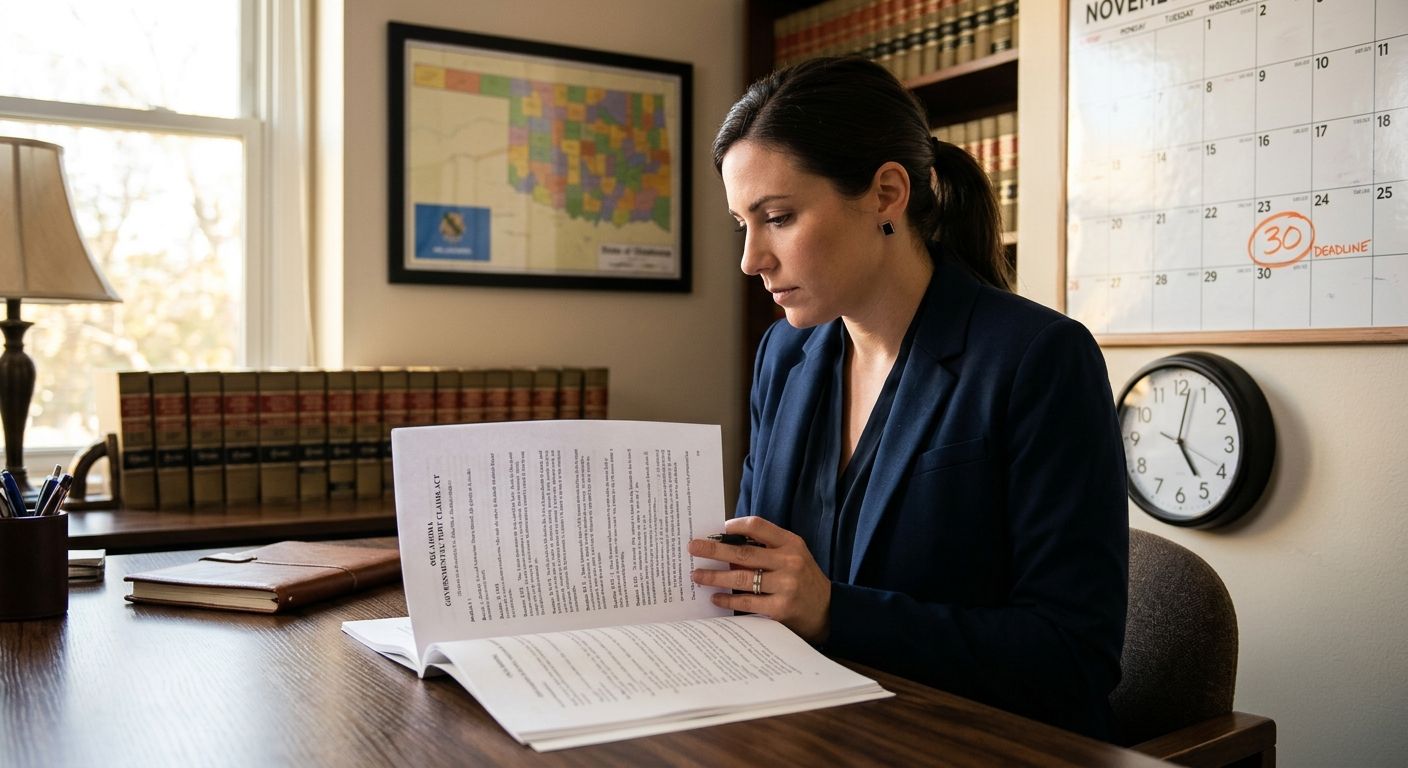
Strict deadlines apply. If you delay, you risk losing your right to sue. Contact us promptly so we can investigate your case before time runs out.
Do I need a lawyer for an insurance bad faith claim?
Absolutely. These cases are complex. Our experienced team navigates Oklahoma’s procedural rules and builds a compelling case. We offer a Free Case Evaluation to discuss your situation.
This website provides general information only and is not legal advice. Viewing this page does not create an attorney-client relationship; representation requires a written agreement. Stipe Law Firm is By Your Side. If you have more questions, call us for a no-obligation case evaluation.
Take the Next Step with Stipe Law Firm
If you have experienced the unreasonable denial of an insurance claim, our attorneys provide focused representation in insurance bad faith litigation in Oklahoma. We offer a Free Case Evaluation with no obligation, and contacting us does not create an attorney-client relationship. With over 60 years of combined experience and a history of successful recoveries for clients throughout Southeast Oklahoma, Stipe Law Firm is By Your Side — call or reach out online today to take the first step.
Resources
- Understand Insurance Bad Faith and Policyholder Rights
- Learn About Bad Faith and Unfair Claims Practices
- Understand Insurance Bad Faith and Legal Representation
- Hire a Bad Faith Insurance Attorney in McAlester
- Find a McAlester Law Firm for Bad Faith Insurance
- Find Stipe Law Firm Near You for Legal Representation
- Learn About Average Personal Injury Settlements in Oklahoma
- Explore Oklahoma Bar Association Legal Resources